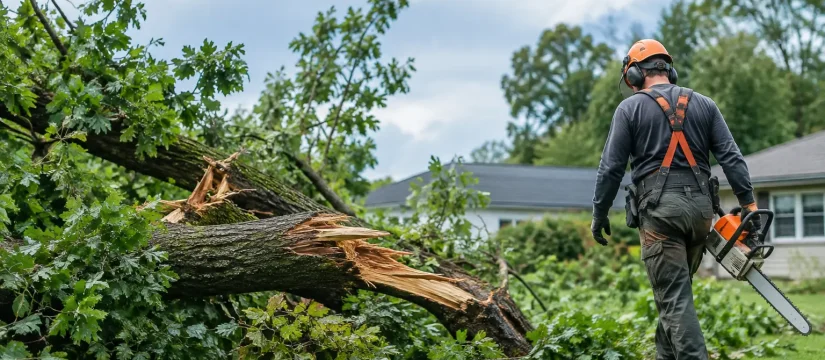
A split limb hanging over the driveway, a pine leaning where it did not lean yesterday, or a canopy scattered across the lawn can make a familiar yard feel suddenly uncertain. Storm damaged tree restoration starts with protecting people and property, then giving the tree the thoughtful care it needs to recover. The goal is not to make damage disappear overnight. It is to make sound decisions that preserve what can be saved and remove what cannot.
In Northwest Louisiana, strong winds, saturated soil, lightning, and heavy rain can all leave their mark. Some storm damage is obvious. Other concerns, including cracked branch unions, root movement, and internal decay exposed by a break, may not reveal themselves until weeks later. A careful response protects your home today and your landscape’s beauty in the seasons ahead.
Start With Safety, Not Cleanup
The first hours after a storm are not the time to grab a ladder or a chainsaw. Downed limbs can be under tension, partially broken branches can fall without warning, and wet ground may no longer support a tree that appears stable. If a limb is touching a power line, stay well away and contact the utility provider immediately. Never attempt to move a branch from a line yourself.
Keep children, pets, vehicles, and foot traffic out of the affected area. From a safe distance, take photos of the tree, the surrounding landscape, and any damage to structures. These photos can be useful for insurance documentation and help a tree professional understand the situation before arriving.
A tree that has fallen completely, is leaning toward a structure, or has large hanging limbs needs prompt professional attention. The same is true when you see lifted soil or exposed roots near the base. Root plate movement can indicate that the tree’s anchor system has failed, even if most of the canopy still looks green.
What Can Be Restored and What Must Be Removed
Not every damaged tree is a lost tree. Mature oaks, crepe myrtles, maples, and many other established trees can recover remarkably well when damage is limited to smaller limbs or one side of the canopy. Restoration depends on the tree species, its overall health, the location of the injury, and how much of its crown and root system remain intact.
A healthy tree with a few torn branches may need selective pruning and monitoring. A tree with a broken main trunk, a major split at a weak branch union, or extensive root upheaval may be unsafe to retain. There is a middle ground, too: a tree may survive but no longer be appropriate near a home, driveway, play area, or commercial entrance.
This is where professional judgment matters. Removing a tree too quickly can mean losing valuable shade and character. Keeping a compromised tree simply because it is still standing can create a larger hazard later. The best decision balances safety, long-term structure, and the role that tree plays in the property’s overall landscape.
Look Beyond the Broken Branches
A canopy can look manageable from the ground while the tree carries serious hidden stress. Watch for fresh cracks in the trunk, peeling bark around a split, cavities exposed by breakage, mushrooms near the root flare, or a noticeable change in lean. These signs do not automatically require removal, but they do call for an experienced assessment.
Pay attention to the ground as well. Soil that has heaved on one side of a tree, new gaps around the trunk, or roots pushed up through turf may signal instability. After prolonged rain, even a tree with no visible breakage can shift as saturated soil loses its holding strength.
Proper Pruning Is the Heart of Restoration
Storm-damaged branches should not be cut back at random. The right pruning removes broken, hanging, rubbing, or poorly attached limbs while maintaining as much healthy foliage as possible. Leaves are the tree’s energy source, and excessive cutting after a storm can turn a recoverable tree into a stressed one.
Clean pruning cuts should be made just outside the branch collar, the slightly swollen area where a branch joins the trunk or a larger limb. Cutting flush against the trunk damages the tree’s natural defense zone. Leaving a long stub is no better, since it may decay and invite pests or disease.
Avoid topping a damaged tree. Topping means cutting large limbs or the upper canopy back to blunt stubs. It may make a tree look smaller in the short term, but it often triggers weak, fast-growing shoots that are more likely to fail in future storms. It also leaves large wounds that are difficult for a tree to seal.
For light cleanup, homeowners may safely remove small, accessible twigs and branches from the ground. Larger limbs, elevated work, tangled branches, and anything near a structure deserve specialized equipment and a trained crew. Storm cleanup can be deceptively dangerous, particularly when branches are twisted together or resting under pressure.
Give the Root Zone a Chance to Recover
A tree’s recovery is not only about its canopy. Roots may have been stressed by wind movement, compacted by equipment, or left sitting in saturated soil after a heavy rain. Once hazardous limbs have been addressed, protect the area beneath the tree from unnecessary traffic.
A two- to three-inch layer of mulch spread around the root zone can help moderate soil temperature and retain moisture. Keep mulch several inches away from the trunk rather than piling it against the bark. That small detail helps prevent moisture-related decay and discourages pests from settling near the base.
Watering should be intentional, not automatic. During a dry stretch following storm damage, deep, gradual watering can support recovery. If the soil is still wet from repeated rainfall, additional irrigation may do more harm than good. A locally informed care plan considers recent weather, drainage, soil type, and the tree’s species instead of applying the same schedule to every yard.
Fertilizer is another area where patience pays off. A stressed tree does not always benefit from an immediate dose of fertilizer. Pushing new growth before roots and wounds have stabilized can create more demand on the tree. A soil-based recommendation and a measured plan are usually more useful than a quick treatment.
Monitor the Tree Through the Next Growing Season
Storm damaged tree restoration is a process, not a single service call. Over the next several months, watch for delayed symptoms such as thinning leaves, dead branch tips, unusual discoloration, new cracks, or sprouts emerging from the trunk and major limbs. A few water sprouts may be the tree’s response to stress, but dense, weak growth can signal a need for corrective pruning.
Inspect the tree again after the next period of high winds or heavy rain. Trees can shift after the original storm, especially when roots were disturbed. For commercial properties, multifamily communities, and homes with mature trees near gathering areas, scheduled follow-up inspections are a practical part of risk management.
If a tree is removed, restoration can still preserve the feeling of the landscape. Stump grinding, soil preparation, replacement planting, and thoughtful bed design can turn an empty space into a fresh opportunity. The replacement tree should be chosen for its mature size, root habits, sun exposure, and distance from roofs, utilities, drives, and patios. A smaller tree planted in the right place often provides more lasting value than a large one planted too close to the house.
Plan for the Next Storm While You Restore
The best time to strengthen a landscape is before the next weather event arrives. Routine pruning can reduce overloaded limbs, correct weak branch structure, and remove deadwood before it becomes a falling hazard. Young trees especially benefit from early structural pruning, which guides them toward stronger form as they mature.
Consider the whole property when planning future work. A well-maintained tree canopy, clear drainage paths, healthy turf, properly placed planting beds, and irrigation that does not overwater root zones all contribute to a landscape that handles difficult weather with more resilience. It is property care with a long view, where beauty and function support one another.
After the immediate mess is cleared, take a moment to look at what your outdoor space needs next. With patient care and the right professional guidance, a storm-tested landscape can grow back safer, healthier, and ready to welcome people home again.