
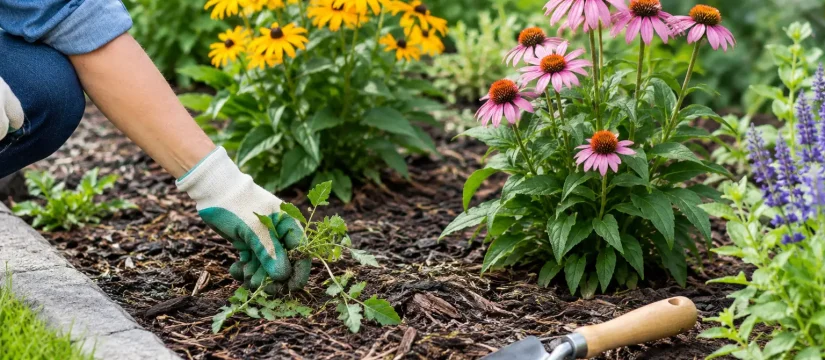
A flower bed can be freshly planted on Saturday and look like it has been claimed by weeds by the following weekend. In Northwest Louisiana, warm temperatures, steady rain, and a long growing season create ideal conditions for color – and for crabgrass, nutsedge, chamber bitter, and other persistent invaders. To prevent weeds in flower beds, the most effective approach is not one product or one Saturday of pulling. It is a layered routine that keeps weed seeds from finding bare soil, sunlight, and water.
A well-kept bed should feel like a welcoming frame around your home, not another chore waiting at the curb. With the right preparation and a little seasonal attention, weed control becomes far more manageable.
Start With a Clean Bed, Not a Quick Cover-Up
Mulch placed over existing weeds may hide them briefly, but it rarely solves the problem. Established weeds can push through thin mulch, while seed heads left in place can scatter a new generation into the bed. Before planting or refreshing mulch, remove the weeds that are already there, including as much of the root system as possible.
This matters especially with nutsedge. Its upright, grass-like blades can be tempting to pull quickly, but tugging only the visible growth often leaves underground tubers behind. Repeated removal when the plants are small can weaken it over time, while a selective treatment may be the better option for a widespread problem. The right choice depends on the weed, the plants nearby, and whether children, pets, or pollinators regularly use the space.
For a bed that has been neglected for a season or more, take the time to clear out old mulch, fallen leaves, vines, and dense weed growth before installing new plants. A clean beginning makes every next step more effective.
Build the Bed So Plants Fill the Space
Open soil is an invitation to weeds. Every gap between shrubs, perennials, and annual color gives weed seeds a place to land and enough light to germinate. Healthy, appropriately spaced plants shade the soil, compete for moisture, and make a landscape bed look fuller by design.
That does not mean crowding every plant together. Overplanting can restrict airflow, increase disease pressure, and create extra pruning work. Instead, choose plants suited to the amount of sun, soil moisture, and mature space available, then allow enough room for their natural growth habit. A thoughtful planting plan creates coverage without making the bed feel cramped.
In Shreveport, Bossier City, Benton, and Stonewall landscapes, this often means pairing dependable foundation shrubs with layered perennials and seasonal color. The result is a bed with visual depth and less exposed ground for weeds to claim.
Use Mulch Correctly to Prevent Weeds in Flower Beds
Mulch is one of the most reliable tools for weed prevention, but only when it is installed at the proper depth and maintained through the year. A two- to three-inch layer of quality organic mulch helps block sunlight from reaching weed seeds, slows evaporation, moderates soil temperature, and gives beds a finished appearance.
Too little mulch will not provide much suppression. Too much can trap moisture against plant crowns and tree trunks, contribute to rot, and encourage roots to grow into the mulch rather than the soil. Avoid the familiar mulch “volcano” around trees and shrubs. Pull mulch back several inches from trunks, stems, and the crowns of perennials so water and air can move where they should.
Shredded hardwood mulch is a popular choice for ornamental beds because it settles together well and looks polished. Pine straw can work beautifully in more natural or wooded settings, though it may need replenishing more often and can shift during heavy rain. Whichever material you choose, refresh only what has decomposed or thinned out. Completely stripping a bed every year can disturb soil and bring more dormant weed seeds to the surface.
Edge the Bed to Keep Lawn Weeds Out
Many weed problems begin at the boundary between turf and planting beds. Bermudagrass, crabgrass, and other runners do not respect a vague line between lawn and landscape. A crisp edge gives the bed a finished Southern-polish look while creating a practical barrier you can monitor.
For simple beds, a clean trench edge may be enough when it is redefined regularly. Steel, aluminum, stone, brick, or quality composite edging can offer a more permanent separation, particularly around formal front-yard beds or high-traffic commercial entries. The best option depends on the style of the property, the curves in the design, and how often the edge will be maintained.
Edging is not a set-it-and-forget-it solution. Grass can still creep over, under, or through weak seams. A quick pass with an edging tool and a close inspection every few weeks during peak growing season can stop a small encroachment from becoming a larger cleanup project.
Water the Plants, Not the Empty Soil
Frequent overhead watering gives weed seeds the same drink your flowers receive. It can also leave foliage wet longer than necessary. Drip irrigation and properly aimed soaker lines deliver water near plant roots, where it does the most good, while leaving much of the open surface drier.
A consistent irrigation schedule also helps established plants develop stronger root systems. Deep, less-frequent watering is generally more useful than a light daily sprinkle, though newly installed plants may need more regular attention while their roots settle in. Soil type, rainfall, plant selection, and seasonal heat all affect the right schedule.
Irrigation systems deserve occasional checks. A broken spray head, overspray onto mulch, or a line watering an empty section of bed can quietly fuel weed growth and waste water. Adjusting coverage as plants mature is a small detail that protects both the landscape and the water bill.
Stay Ahead of Seeds With Short, Regular Visits
The most discouraging weed-control strategy is waiting until the bed looks overgrown. By then, many weeds are mature enough to seed, and pulling them stirs the soil just as more seeds are ready to sprout. A brief weekly walk-through is easier and more effective.
Pull weeds after rain or irrigation, when the soil is moist enough for roots to release. Focus on young weeds before they flower. Keep a hand tool nearby for tap-rooted weeds, and avoid tossing plants with seeds into an open compost pile unless it reaches temperatures high enough to destroy them.
Seasonal cleanups are equally valuable. Remove fallen leaves that mat down over mulch, prune plants as needed for airflow and shape, and replenish thin mulch before hot summer weather or after a wet winter. These small, consistent actions preserve the neat, cared-for appearance that makes a home or business property feel inviting.
Be Thoughtful About Weed Barriers and Herbicides
Landscape fabric has a role beneath gravel paths, decorative stone, or hardscape features, but it is rarely the best long-term choice inside planted flower beds. Organic matter eventually collects on top of the fabric, creating a new layer where weeds can grow. Meanwhile, roots from shrubs and perennials can become tangled in the material, making future planting and maintenance more difficult.
Pre-emergent weed control can be useful in beds with a history of annual weeds, especially when applied at the correct time and according to the label. It prevents many seeds from germinating, but it will not kill weeds that are already growing. It can also interfere with seeds you intentionally plant, so it is not the right fit for every annual-color bed or pollinator garden.
Post-emergent products require even more care. Some treatments can damage nearby ornamentals through drift, root uptake, or accidental contact. Spot treatment, hand removal, and correct product selection are often safer than broad spraying. When a weed issue keeps returning, identifying the exact weed before treatment saves time, money, and healthy plants.
Give New Beds Extra Attention Their First Year
A newly designed bed is at its most vulnerable before plants fill in and mulch settles into place. Check it often during the first growing season, particularly after heavy rain and during summer heat. Remove new weeds promptly, correct washed-out mulch, and make sure irrigation is reaching plant roots without soaking walkways or bare ground.
As plants mature, the bed will begin doing more of the work for you. Dense, healthy planting, clean edging, proper mulch depth, and attentive watering create a landscape that looks cared for between visits, not just immediately after a cleanup.
If weeds are overwhelming a bed, it may be a sign that the issue is larger than pulling alone. A refreshed planting plan, improved edging, irrigation adjustments, or professional weed-control timing can turn a frustrating area into a garden border that supports the beauty of the whole property. The goal is not a perfectly sterile bed. It is a healthy, graceful one where the plants you chose have room to shine.