A mature tree can be the pride of a property – until a heavy limb hangs over the roof, roots begin lifting a walkway, or a storm reveals a split trunk. Tree removal is rarely the first choice for a well-loved yard, but it can be the most responsible one when a tree threatens people, structures, or the health of the surrounding landscape.
For homeowners in Shreveport, Bossier City, Benton, and nearby communities, the decision often follows a season of high winds, saturated soil, summer stress, or visible decline that has become harder to ignore. The right approach is not simply to cut down a tree. It is to assess the risk, protect the property, and make a thoughtful plan for what comes next.
Signs Tree Removal May Be Necessary
A tree does not have to be completely dead to create a serious concern. Large dead limbs, deep cracks where major branches meet the trunk, hollow areas, peeling bark, or fungal growth near the base can all point to structural trouble. Leaning is another concern, particularly when it is new, pronounced, or accompanied by exposed roots and disturbed soil.
After a severe storm, look beyond the obvious broken branches. A branch that has twisted but not fallen may be under tension. A trunk can also sustain internal damage that is not easy to spot from the ground. Trees growing close to homes, driveways, fences, utility areas, or well-used outdoor spaces deserve a closer evaluation after high winds.
Location matters as much as condition. A declining tree in an open area may be managed with monitoring and pruning. The same tree over a child’s play area, parking space, or roofline presents a different level of risk. This is where professional judgment helps separate a tree that needs routine care from one that needs to come down.
When Pruning Is Better Than Tree Removal
Removal should not be the automatic answer to every overgrown or imperfect tree. Many healthy trees benefit from selective pruning that removes deadwood, improves clearance over a roof or driveway, and reduces crowding within the canopy. Proper pruning can encourage healthier structure while preserving the shade, character, and cooling benefits that mature trees bring to a Louisiana landscape.
The trade-off is that pruning has limits. Removing too much live growth at once can stress a tree, leave it vulnerable to disease, and create weak regrowth. Topping a tree – cutting large branches back to stubs – may seem like a quick way to make it smaller, but it often creates more problems than it solves. A qualified tree professional can determine whether targeted pruning will address the concern or whether the tree’s condition makes removal the safer choice.
Trees that are crowding a home or competing heavily with nearby plants may also call for a broader landscape plan. Sometimes one poorly placed tree is preventing turf, shrubs, or a garden bed from thriving. Removing it can give the rest of the property more light, air circulation, and room to grow.
Why Timing and Planning Matter
Emergency work after a storm is sometimes unavoidable. In non-emergency situations, however, a planned removal is usually safer and easier on the property. The crew can evaluate access, note gates and fences, identify nearby landscape features, and determine how sections of the tree can be lowered without damaging the lawn, patio, roof, or irrigation system.
Before work begins, utility awareness is essential. Branches near power lines require special caution and may involve the utility provider. Underground lines, irrigation components, septic areas, and landscape lighting should also be considered before equipment enters the yard. A polished result depends on what happens before the first cut, not just on how quickly the tree disappears.
Access can influence the method and cost of the job. A tree in a wide backyard with open space may be removed efficiently in larger sections. A tree tucked between a home, fence, and neighboring property may need to be dismantled carefully, piece by piece. That additional precision is worthwhile when it protects the parts of your property you have worked hard to improve.
What a Professional Tree Removal Process Looks Like
A careful tree service begins with an on-site assessment. The crew considers the tree’s species, height, lean, condition, branch spread, and proximity to structures. They also review the path for equipment and the best place to stage materials, with attention to lawn conditions if the ground is soft from rain.
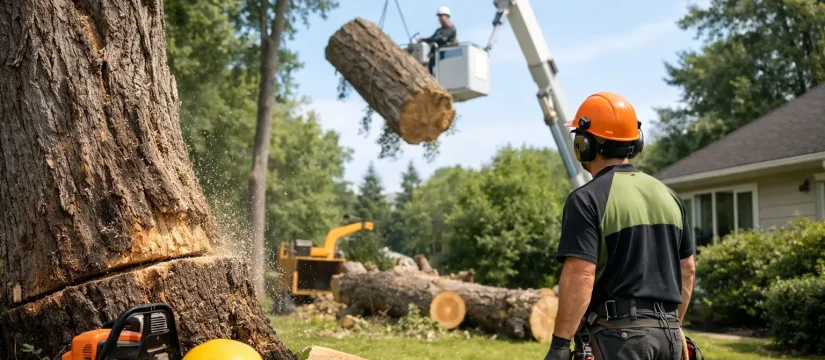
During removal, the tree is generally taken down in controlled sections rather than dropped all at once. Limbs are cut and lowered strategically, then the trunk is reduced in manageable pieces. This is especially important in established neighborhoods, where homes, outdoor living areas, and neighboring yards are close together.
Cleanup should be part of the conversation, not an afterthought. Ask how branches, logs, and debris will be handled and whether the work area will be raked and cleared. If the tree stood within a landscaped bed, discuss how surrounding plants and edging will be protected. Good property care respects the entire setting, from the front porch view to the far corner of the backyard.
Do You Need the Stump Removed?
Once the tree is gone, the stump becomes the next decision. Leaving it can be appropriate in a wooded area or a location where it will not affect mowing, planting, or future improvements. In a maintained lawn, however, stumps can become obstacles, attract insects, produce unwanted shoots, and make the space feel unfinished.
Stump grinding removes the visible portion below grade and produces wood chips that may be used elsewhere in the landscape or hauled away. It is usually the practical choice when you plan to restore turf, expand a planting bed, install a patio, or create a cleaner mowing path. Keep in mind that grinding does not remove every root from the soil. Large roots gradually decay over time, and the ground may settle slightly as they break down.
If you intend to plant another tree in the same area, do not assume the old location is the best place for it. Remaining roots, compacted soil, and the previous tree’s disease history can affect the new planting. A nearby location with fresh soil and enough room for mature growth often gives the replacement a better start.
Restoring the Space After Removal
Tree removal changes more than a view. It changes sunlight, drainage, wind exposure, and how your outdoor space is used. A shady lawn may suddenly receive hours of direct afternoon sun. Shade-loving plants may need to be relocated, while turf or flowering shrubs may finally have the light they need.
This is an ideal moment to consider the property as a whole. The open space might become a refreshed garden bed, a better route to the backyard, an expanded patio edge, or room for a carefully selected replacement tree. If privacy was lost with the removal, layered shrubs and small ornamental trees can soften the view without placing another oversized tree too close to the home.
For commercial properties, the aftermath deserves equal attention. A removed tree can leave a highly visible gap near an entrance, parking area, or sign. Prompt cleanup and a considered replacement plan help preserve curb appeal and show tenants, customers, and visitors that the property is cared for.
Choose Care That Looks Beyond the Cut
The best tree decisions protect the people and structures on your property while honoring the role trees play in its beauty. A healthy tree is an asset worth maintaining. A damaged or poorly placed tree may require removal, but that does not have to leave the landscape feeling diminished.
With a careful assessment and a plan for restoration, the space can become safer, more functional, and just as welcoming as before. At Front Porch and Garden, that is the standard: property care with Southern polish, thoughtful from the first evaluation to the renewed landscape that follows.