A mature live oak shading the driveway, a crape myrtle framing the front walk, or a row of pines behind the fence can make a property feel established and welcoming. But when limbs begin crowding the roofline, scraping gutters, blocking a view, or hanging weakly over a favorite gathering spot, a professional tree pruning service Shreveport homeowners can rely on becomes more than a curb-appeal decision. It is thoughtful property care.
Pruning is not simply cutting branches until a tree looks tidier. Done well, it supports the tree’s structure, protects the spaces beneath it, and preserves the natural shape that gives your landscape character. Done poorly, it can leave a tree stressed, unbalanced, and more vulnerable to disease, decay, or storm damage.
What Proper Tree Pruning Is Meant to Do
A well-pruned tree should still look like itself when the work is finished. The goal is not to carve it into a perfect outline or remove every low branch. Instead, a trained crew evaluates the canopy, branch connections, overall health, and the tree’s relationship to your home, driveway, lawn, and neighboring structures.
Pruning often includes removing dead, damaged, diseased, rubbing, or poorly attached limbs. It may also involve selective thinning to improve airflow and light movement through a crowded canopy. On young trees, structural pruning can encourage a stronger framework before competing leaders or awkward limb angles become larger problems.
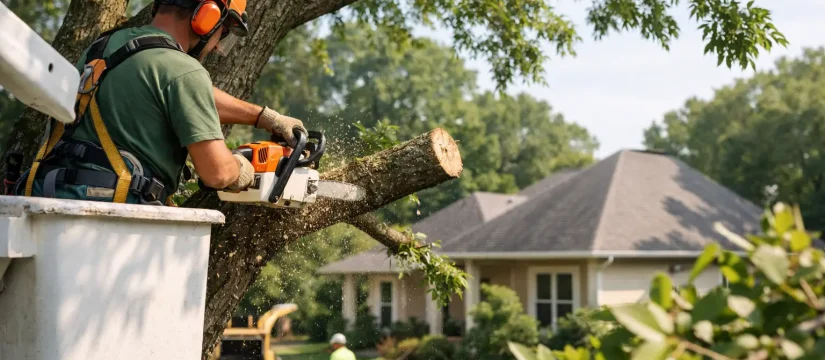
Clearance pruning has a practical place, too. Branches may need to be lifted away from a roof, walkway, driveway, fence, or outdoor living area. The right amount of clearance depends on the tree species, its age, and how the space is used. A backyard with children, pets, and regular weekend gatherings deserves a different evaluation than a wooded edge of a larger property.
The trade-off matters. Removing too much foliage at once can reduce a tree’s ability to produce energy, expose inner limbs to sun stress, and trigger weak, fast-growing shoots. That is why a careful approach is usually better than an aggressive one.
When to Schedule Tree Pruning in Northwest Louisiana
There is no single pruning date that suits every tree. Species, age, condition, recent weather, and the reason for pruning all affect timing. Still, seasonal planning can make a noticeable difference.
For many deciduous shade trees, dormant-season pruning can make the branch structure easier to assess and may reduce stress while the tree is not actively growing. In our area, that often means scheduling planned work during the cooler months. It is also a practical time to address limbs before spring storms and new growth arrive.
Flowering trees require a little more nuance. Some bloom on old wood, meaning a hard trim at the wrong time can remove the next season’s flowers. Others bloom on new growth and can be pruned differently. Crape myrtles, for example, benefit from selective, restrained pruning rather than severe topping. The familiar practice sometimes called “crape murder” may create an unnatural form and weaker regrowth.
Safety concerns should not wait for an ideal season. A cracked limb, a branch that has suddenly sagged, storm damage, or a canopy pressing against a structure deserves prompt attention. After heavy rain or wind, a visual check from the ground is wise. Look for fresh splits, hanging limbs, exposed wood, and branches that have shifted position.
Signs Your Trees Need Professional Attention
A tree does not need to look obviously distressed before it needs care. Small structural issues can become expensive problems as limbs gain weight and reach farther over roofs, vehicles, or walkways.
Call for an assessment when you notice dead branches in the canopy, limbs rubbing against one another, dense interior growth, or branches extending too close to your home. Fungal growth near the base, hollow areas, peeling bark, large cavities, or a sudden lean also warrant a closer look. These signs do not always mean a tree must be removed, but they do call for a trained evaluation.
Commercial properties and HOAs benefit from the same watchfulness. A limb over a parking area, sidewalk, entrance, or playground affects more than appearance. Regular tree care helps maintain visibility, reduces avoidable hazards, and keeps a property looking responsibly maintained for residents, tenants, customers, and guests.
Never try to manage branches near power lines yourself. Even a limb that appears easy to reach can create a serious hazard when electricity is involved. Keep clear and contact the appropriate utility provider or a qualified tree professional who can advise on the next step.
What a Tree Pruning Service in Shreveport Should Consider
Tree pruning is most successful when it begins with questions, not a chainsaw. How old is the tree? What species is it? Has it been topped, storm-damaged, or heavily pruned before? Is the concern shade, clearance, safety, fruit production, appearance, or all of the above?
A thoughtful service should consider the whole property. A branch may be healthy but poorly placed for a new patio, irrigation work, roof replacement, or a landscape bed that needs more filtered light. In other cases, removing a branch may change the amount of afternoon sun reaching the lawn, which can affect turf health and planting choices below.
That broader view is especially valuable in established yards. Tree roots, shade patterns, drainage, garden beds, and hardscape all work together. Pruning one part of the landscape should support the rest of it, not create a new problem to solve later.
A professional plan also accounts for access and cleanup. Large limbs may require specialized equipment, controlled lowering, or a careful work zone to protect fences, roofs, plantings, and vehicles. Ask what the crew will remove, how debris will be handled, and whether the scope includes hauling away brush. Clear expectations make the day of service easier for everyone.
Pruning Practices That Can Harm a Tree
The quickest-looking solution is often the one that causes the most long-term trouble. Topping, which removes large portions of a tree’s upper canopy, can leave big wounds and prompt weak sprouts that are more likely to fail later. Flush cuts made too close to the trunk can damage the branch collar, the area that helps the tree seal a pruning wound.
Over-thinning can be just as harmful. A canopy does need airflow, but stripping out too much interior growth can expose bark and branches that were previously shaded. It can also leave the tree with an uneven, sparse look that does not suit a well-kept residential landscape.
Small cuts made in the right places are usually preferable to large cuts made after years of neglect. That is one reason recurring property care is valuable. When trees are observed regularly, minor clearance and structure needs can often be addressed before they become major corrections.
A Better Standard for a Welcoming Property
Your trees are part of the first impression your home or business makes. They provide shade for front-porch conversations, soften the edges of a driveway, frame seasonal decorations, and give a landscape the sense of permanence that new plantings take years to achieve.
Front Porch and Garden approaches tree care with the same boutique standard we bring to lawns, gardens, and outdoor living spaces: a close look at what your property needs, work that respects its natural beauty, and details that support how you actually live there. Whether the need is routine canopy shaping, safer clearance, or post-storm attention, the right care should leave your outdoor space feeling more open, secure, and beautifully kept.
A well-pruned tree should never be the loudest thing in the yard. It should simply make the whole property feel healthier, safer, and more inviting from the moment you arrive.