
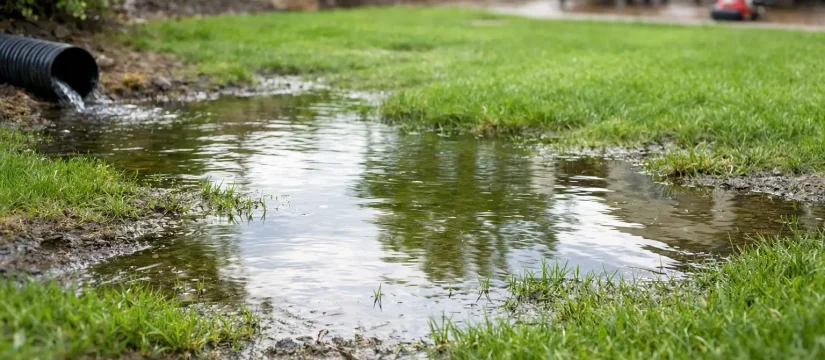
A puddle near the curb after a hard Northwest Louisiana rain is one thing. Water that remains in the same spot for days, turns turf yellow, or makes the yard feel soft underfoot is another. If you are asking, “why does lawn water pool?” the answer is usually not simply that it rained too much. Standing water points to an issue with how your property absorbs, slopes, or moves water.
A healthy lawn needs moisture, but it also needs air around its roots. When water has nowhere to go, grass can thin out, weeds can take hold, mosquitoes gain a place to breed, and muddy areas can become a regular frustration for children, pets, guests, and lawn equipment. The good news is that most pooling problems have an identifiable cause, and the right correction can protect both your landscape and your home’s curb appeal.
Why Does Lawn Water Pool After Rain or Irrigation?
Water always follows the easiest path. It will settle in the lowest point of a lawn, move toward compacted soil that cannot absorb it, or collect where an irrigation system is applying more water than the ground can handle. In Shreveport, Bossier City, Benton, and nearby communities, heavy downpours and clay-heavy soils can make those conditions especially noticeable.
The first step is to observe the pattern. Does the water pool only after a major storm, or after every irrigation cycle? Does it disappear within a few hours, remain for a day, or linger all week? Is the wet spot in an open lawn, beside a patio, at the base of a downspout, or near a driveway? Those details help distinguish a simple irrigation adjustment from a drainage project.
A Low Spot Is Catching the Runoff
The most common cause is a grade issue. A lawn may look level from the porch yet have a shallow dip that collects runoff from the surrounding yard, roof, driveway, or neighboring property. Sometimes the low spot develops gradually as soil settles around utility work, tree roots, old stumps, or newly built landscape beds.
Small depressions can often be corrected by carefully adding and blending topsoil so water sheds naturally across the lawn. This is not a job for piling soil directly over struggling grass and hoping for the best. The area needs to be shaped gradually, using soil compatible with the existing lawn, then replanted or re-sodded as needed. A rushed fix can create a new hump that is difficult to mow or simply send water somewhere else.
Compacted Soil Cannot Take Water In
Clay soil is common across our region, and it can hold water tightly. Compaction makes the problem worse. Foot traffic, construction equipment, repeated mowing on wet ground, and even a season of heavy rain can press soil particles together until water cannot move through them efficiently.
You may have compaction if rainwater sits across a broader area rather than in one obvious dip, the lawn feels hard and dense when dry, or grass roots are shallow and weak. Core aeration can help by opening channels in the soil and allowing water, oxygen, and nutrients to reach the root zone. It works best as part of a larger lawn-care plan, not as a cure-all for a yard with a major slope or drainage problem.
Organic matter can also improve soil structure over time, but it requires patience. Topdressing, proper fertilization, and consistent turf care support healthier roots, which are better able to move water through the soil. If the ground is heavily compacted or the area remains saturated, professional evaluation is worthwhile before investing in seed, sod, or additional plants.
Irrigation Is Running Too Long or Too Often
A pooling lawn after irrigation may be receiving more water than it can absorb. This is particularly common when sprinkler schedules are set for a hot stretch of weather and never adjusted after rain returns. Clay soil often benefits from shorter watering cycles with time between them, rather than one long cycle that sends water running across the surface.
A broken sprinkler head, incorrect nozzle, poor head spacing, or a zone that waters one area twice can also create a persistent wet spot. Watch each irrigation zone run. Look for water spraying onto pavement, misting in the wind, flooding beside a head, or collecting at the bottom of a slope.
Do not assume every brown or thin patch needs more water. Turf can look stressed when its roots are oxygen-starved from too much moisture. Reducing irrigation may feel counterintuitive, but it is often the right first move when water pools after scheduled watering.
Downspouts and Hard Surfaces Are Sending Water Into the Yard
Roof runoff moves fast. A single downspout can concentrate a large amount of water in one small area during a storm, washing mulch away and creating a muddy basin beside the foundation. Driveways, patios, and walkways can produce the same effect by directing water toward the lawn instead of away from it.
Extending a downspout, redirecting its outlet, or carrying roof water to an appropriate drainage area can relieve a localized wet spot. The destination matters. Water should not be redirected toward a neighbor’s property, a sidewalk, or the foundation. It should move to a suitable outlet where it can disperse safely and legally.
Thatch, Roots, or Buried Obstacles Are Blocking Drainage
A thick layer of thatch can prevent water from reaching the soil, particularly in warm-season lawns. That water may sit near the surface or run off before the roots receive what they need. Dethatching is helpful only when thatch is truly excessive, so avoid aggressive removal without checking the lawn first.
Tree roots can create a different challenge. Mature trees are valuable assets, but their roots can change grade, compete with turf, and make a section of yard difficult to drain. Buried construction debris, old landscape fabric, compacted fill dirt, or remnants of a former structure may also interfere with water movement. These situations call for a careful plan that protects trees and avoids creating unnecessary damage.
How Long Should Water Stay on a Lawn?
After a strong rain, a small amount of standing water may be normal for several hours. The concern rises when it remains for more than 24 hours in warm weather, returns after modest rainfall, or keeps grass from recovering. A lawn that stays wet for several days is more vulnerable to root disease and turf loss.
Pay close attention when pooled water is near your home. Soil should slope away from the foundation so water does not collect against it. Wet crawl spaces, damp interior walls, recurring mulch washout, or erosion near the house deserve prompt attention. Lawn drainage and foundation drainage are connected, even when the puddle appears to be several feet away.
Choosing the Right Fix for a Pooling Lawn
There is no single drainage solution that fits every property. The best approach depends on the source of the water, the size of the affected area, soil conditions, grade, underground utilities, and where water can safely go.
For a small low area, regrading and fresh sod may be enough. For a compacted lawn, aeration and improved soil care may bring meaningful improvement. For runoff from a roof or patio, downspout changes and surface drainage can solve the issue. Larger or recurring problems may require a swale, catch basin, French drain, channel drain, or more extensive grading.
Drainage systems are effective when they are designed around the actual water flow. A French drain, for example, is not a decorative trench filled with gravel. It needs the right depth, slope, pipe, fabric, and discharge point. Installed without a clear outlet, it can become an expensive underground puddle.
Before any digging begins, make sure underground utilities are located and consider existing irrigation lines, tree roots, septic components, and drainage easements. The goal is not simply to make water disappear from one corner of the yard. It is to guide it responsibly while preserving a landscape that looks polished and works beautifully.
When to Ask for a Professional Drainage Assessment
A professional assessment is especially helpful when pooling returns after basic changes, covers a large area, affects the foundation, or occurs alongside erosion. It is also wise when you are planning a patio, retaining wall, landscape renovation, or new irrigation system. Addressing water movement before a project begins is far easier than correcting it after new sod, plants, or hardscaping are in place.
At Front Porch and Garden, drainage concerns are considered alongside the full picture of your property: lawn health, irrigation performance, landscape design, and how your outdoor spaces are used. That thoughtful approach helps turn a soggy inconvenience into a lasting improvement for the home.
A well-drained yard should feel like part of your welcome, not a place everyone has to walk around. With a careful look at where water starts, where it settles, and how your soil responds, even a troublesome wet spot can become the beginning of a healthier, more usable landscape.