A customer can form an opinion of your business before they reach the front door. Overgrown turf at a retail center, weeds in a monument sign bed, dead shrubs outside an office, or leaves collecting along a church entry send a message – even when the building itself is well cared for. Thoughtful commercial property landscape maintenance gives visitors a different experience: one of order, welcome, and confidence.
For property managers and business owners, the goal is not simply to keep grass short. It is to protect the appearance, function, and long-term value of a property while making a dependable impression on tenants, customers, employees, and guests. In Shreveport, Bossier City, Benton, and Stonewall, that takes a plan built for long growing seasons, sudden storms, heat, humidity, and the everyday wear of a busy property.
Commercial Property Landscape Maintenance Is Property Care
Commercial grounds have more moving parts than a typical residential lawn. There may be high-visibility entrances, multiple buildings, parking lot islands, sidewalks, drainage areas, common spaces, signage, and trees that need professional attention. Each area has a different job to do, but together they create the property’s first impression.
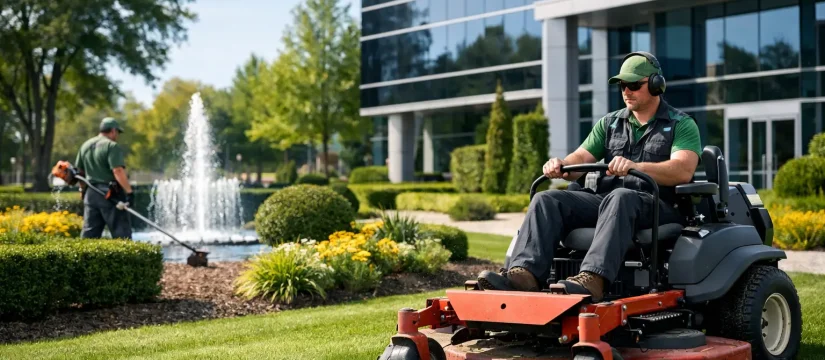
A consistent maintenance program typically includes mowing, edging, blowing hard surfaces clean, pruning shrubs, controlling weeds, removing litter and seasonal debris, and monitoring plant health. Depending on the property, it may also include fertilization, irrigation checks, mulch refreshes, flower rotations, tree care, and seasonal cleanup. The right scope depends on how the property is used, how much traffic it receives, and how prominently it is seen from the road.
A medical office, for example, benefits from neat walks, clear entries, healthy foundation plantings, and an appearance that feels calm and cared for. An apartment community may need close attention to common areas, dog stations, curb lines, and leasing-office landscaping. Retail centers have their own priorities: parking islands, storefront sightlines, trash-free grounds, and a landscape that still looks presentable after a crowded weekend.
The best plan is not the one with the most tasks on paper. It is the one that keeps the spaces people notice most looking intentional while addressing the details that prevent larger problems later.
What Reliable Maintenance Looks Like Week to Week
Consistency is the difference between landscape service and landscape stewardship. When crews arrive on a dependable schedule, small issues are easier to spot before they become expensive distractions. A broken irrigation head, thinning turf, storm-damaged limb, or insect problem is much simpler to address early than after it affects the whole property.
During active growing months, weekly visits are often the right fit for commercial lawns in Northwest Louisiana. Grass can grow quickly after rain, and skipped mowing can leave a property looking neglected in just a few days. In cooler or drier stretches, the visit schedule may be adjusted, but the property should still be monitored for weeds, debris, irrigation concerns, and seasonal needs.
Good mowing is more than a fast pass with a mower. Turf should be cut at an appropriate height, sharp blades should leave a clean finish, and crews should take care around curbs, trees, drains, and landscape beds. Edges need definition, hardscapes need to be cleared, and clippings should not be left in entryways or parking areas. These are small details, but they are the details people remember.
Landscape Beds Need Their Own Routine
Beds are often the first area to show neglect. Weeds compete with ornamental plants, old mulch fades and washes away, and shrubs can quickly grow beyond their intended shape. Regular hand-detailing, selective pruning, weed control, and fresh mulch keep beds polished without making them look overly trimmed or artificial.
Pruning deserves particular care. Shrubs should be maintained for their health, mature size, and purpose in the design, not sheared into the same shape by default. Proper pruning can improve sightlines near entrances and signs, allow air movement around plants, and keep walkways clear. Poor timing or aggressive cutting, however, can remove blooms and leave plants stressed. This is where local horticultural knowledge matters.
Irrigation Protects the Investment
An irrigation system should support the landscape, not quietly waste water. Broken heads, misdirected spray, leaks, and poorly timed cycles can create dry spots, standing water, runoff, and higher utility bills. Regular inspection is especially valuable as temperatures rise and plants begin asking for more water.
Not every commercial property needs the same irrigation schedule. Established trees, newly planted shrubs, turf areas, annual color, shaded beds, and sunny parking-lot islands all have different needs. Adjusting zones for weather and season helps protect plant material while using water more thoughtfully. After a heavy rain, irrigation may need to pause. During prolonged heat, a stressed area may need a closer look rather than simply more water.
The Seasonal Work That Keeps Grounds Looking Finished
A commercial landscape should change with the season without falling behind it. Spring is a time to clear winter debris, inspect irrigation, fertilize as appropriate, refresh beds, and prepare turf for active growth. It is also an ideal time to replace plants that did not make it through winter or have outgrown their location.
Summer maintenance centers on mowing frequency, water management, weed pressure, pruning, and storm readiness. Heat can be hard on newly installed plantings and exposed areas near pavement. A watchful maintenance team can identify stress early and recommend practical corrections before a landscape begins to look tired.
Fall brings leaf cleanup, reduction of warm-season growth, and preparation for cooler weather. It is a useful time to reassess beds, improve drainage concerns, and make planting decisions for the months ahead. Winter may look quieter, but it is often the right season for selective pruning, hardscape improvements, tree work, and planning upgrades that would be disruptive during peak traffic.
Seasonal color can also make a meaningful difference at high-visibility entrances. It is not necessary for every site, but a well-designed rotation near a leasing office, restaurant, church, or professional building can make the property feel especially inviting. The trade-off is that annual color requires more frequent watering and replacement than permanent plantings. For some properties, a refined mix of durable shrubs, perennials, and fresh mulch delivers a better return.
Safety, Access, and Curb Appeal Belong Together
Commercial landscape maintenance supports safety as much as appearance. Low limbs can obstruct vehicle paths. Overgrown shrubs can hide signs, lighting, and entry points. Wet leaves on sidewalks create slip concerns, while vegetation growing over curbs can make parking areas look poorly managed.
Drainage also deserves attention. Water pooling near walkways, entrances, or parking lots can damage turf, limit access, and create a frustrating experience for visitors. Landscaping cannot solve every drainage issue on its own, but regular observation helps reveal patterns. Grading improvements, drainage solutions, plant changes, or irrigation adjustments may be appropriate depending on the cause.
There is a balance to maintain. A property should feel open and secure, but it should not feel bare or harsh. Thoughtful planting, well-maintained trees, clean edges, and healthy turf soften commercial architecture and make people more comfortable spending time there.
Choosing a Maintenance Partner for Your Property
Price matters, but the lowest quote can become costly if service is irregular, communication is difficult, or important details are missed. When comparing commercial maintenance providers, look beyond the mowing line item. Ask how visits are scheduled, who communicates about property concerns, how irrigation or tree issues are handled, and whether the provider can recommend improvements when conditions change.
It also helps to clarify expectations before service begins. Identify the property areas that need the most attention, such as the main entrance, leasing office, sidewalk corridors, monument signs, or tenant-facing courtyards. Discuss service timing, especially for businesses with peak customer hours. A restaurant patio may need service before opening, while an office park may prefer crews on a quieter day.
A locally informed partner can make stronger recommendations about plant selection, storm recovery, turf care, and irrigation practices for the Ark-La-Tex climate. Front Porch and Garden brings a boutique standard to recurring commercial care, pairing reliable service with the kind of detail that makes a property feel genuinely tended.
When Maintenance Should Lead to an Upgrade
Recurring care will preserve a landscape, but it cannot always correct an outdated design or a problem planted into the wrong conditions. If shrubs constantly block windows, turf fails in a deeply shaded area, mulch washes out after every storm, or an entrance lacks definition, an improvement project may be more cost-effective than repeated patchwork.
Small upgrades can have an outsized effect. Decorative curbing can sharpen bed lines. Fresh plant material can frame an entry. A repaired irrigation zone can protect an entire planting area. A well-placed tree, patio feature, or refreshed common space can improve how tenants and visitors use the property.
The strongest commercial landscapes are not flashy for a season and forgotten afterward. They are welcoming every day, practical in every kind of weather, and cared for closely enough that visitors notice the result without ever seeing the work behind it.