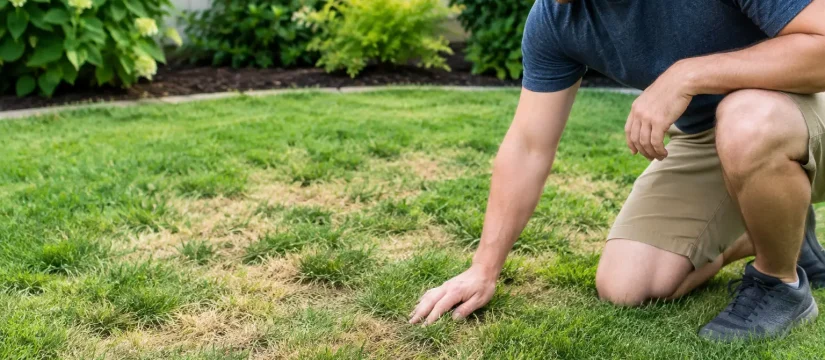
A lawn rarely becomes patchy for just one reason. If you have found yourself asking, “why is my lawn patchy?” the answer is usually hiding in the pattern of the thin spots: where they appear, how quickly they spread, and what has changed around them. A few bare places beside the driveway call for a different solution than a wide, pale section beneath a mature oak.
In Shreveport, Bossier City, Benton, and surrounding communities, our long growing season, heavy summer heat, clay-rich soils, and powerful afternoon storms can all affect turf. The good news is that most patchy lawns can improve once the underlying cause is identified. More fertilizer or more water is not always the answer – and sometimes it makes the problem worse.
Why Is My Lawn Patchy? Start With the Pattern
Before buying grass seed or applying a treatment, take a close look at the patches. Are they dry and straw-colored, muddy and compacted, chewed at the roots, or simply thinner than the surrounding grass? A lawn is a living part of the property, and its appearance offers useful clues.
Patchy grass that follows the line of a sprinkler zone may point to uneven irrigation. Bare soil along a fence, under trees, or beside a frequently used gate often points to shade or foot traffic. Patches that enlarge in roughly circular areas may be disease-related, while turf that lifts easily from the ground can signal insects feeding on the roots.
It also helps to consider timing. A warm-season lawn such as Bermuda, zoysia, or St. Augustine naturally loses color during winter dormancy. That is different from a lawn that stays thin through late spring and summer, when it should be actively growing.
The Most Common Causes of a Patchy Lawn
Inconsistent watering or poor drainage
Grass needs moisture at the root level, not a quick daily splash on the surface. Shallow, frequent watering encourages shallow roots, leaving turf vulnerable when Northwest Louisiana temperatures climb. On the other hand, overwatering can keep roots too wet, invite fungal disease, and create thin areas in low spots.
Irrigation coverage matters just as much as watering frequency. A broken sprinkler head, clogged nozzle, poor controller setting, or head blocked by shrubs can leave one section thirsty while another becomes saturated. Run each irrigation zone and watch it for a full cycle. Look for dry arcs, overspray onto pavement, pooling water, and heads that do not rise properly.
For established turf, deeper watering less often is generally healthier than daily watering. Exact schedules depend on rainfall, soil, grass type, and the season, so there is no single setting that works for every property.
Compacted soil and heavy traffic
Soil compaction is especially common where children play, pets run, vehicles are parked, or people repeatedly enter and exit the yard. In compacted soil, air and water cannot move freely, and grass roots struggle to spread. The lawn may look thin even when it receives regular water and fertilizer.
Clay soils, common across this region, can become dense after construction activity or long wet periods. If water stands on the lawn after a normal rain or a screwdriver is difficult to push into the soil, compaction may be part of the issue.
Core aeration can relieve compaction by removing small plugs of soil and allowing oxygen, water, and nutrients to reach deeper roots. It is most useful when performed during the active growing period for your turf type, not when grass is dormant or stressed by extreme weather.
Too much shade
A lush tree canopy can make a home feel established and welcoming, but turf still needs enough sunlight to grow. Bermuda grass, in particular, needs plenty of direct sun. St. Augustine and some zoysia varieties tolerate more shade, but no common lawn grass thrives in deep shade all day.
If grass steadily thins beneath trees or on the north side of a building, adding more fertilizer will not create sunlight. Selective tree pruning can improve filtered light and airflow, but it should be done thoughtfully to protect the tree. In deeply shaded areas, a mulched planting bed, groundcover, stepping-stone path, or shade garden may be more beautiful and practical than forcing grass to survive.
Mowing too short or with dull blades
Scalping is one of the fastest ways to turn a healthy-looking lawn into a patchy one. When grass is cut too low, it has less leaf surface to produce energy and less protection from heat. The ground dries faster, weeds find an opening, and the lawn can lose density.
A mower blade that is dull tears grass instead of making a clean cut. Torn tips often turn brown, giving the lawn a faded appearance even when it is otherwise healthy. Keep blades sharp, avoid removing more than one-third of the grass height at once, and adjust mowing height for the grass species and season.
If your yard has uneven ground, scalping can occur in the same places every visit. Those spots may need a gradual soil correction rather than a lower mower setting.
Insects, disease, and weeds
Chinch bugs, grubs, armyworms, and other pests can damage turf, but insect treatment should follow identification. Applying a broad product without confirming the problem can harm beneficial organisms and waste money. Pull gently on damaged grass: if it releases from the soil with little resistance and the roots look sparse, inspect the area for grubs or other root-feeding pests.
Fungal diseases can also create discolored or thinning patches, especially during humid weather or when grass stays wet overnight. Brown patch is a familiar concern for St. Augustine lawns. Disease pressure is often connected to excess nitrogen, poor airflow, overwatering, or watering late in the day.
Weeds add another complication. They do not simply make a lawn look untidy – they compete with grass for water, light, and nutrients. A patchy lawn gives weeds room to establish, and weeds can then make the turf even thinner. The most effective weed control plan combines proper mowing, healthy soil, correctly timed applications, and a dense stand of grass.
Pet damage and hidden household stress
Dog urine can leave small, concentrated brown spots, often with a darker green ring around the edge. The grass is not always beyond repair, but the area should be watered soon after use when possible. Repeated traffic from pets can also compact soil and wear away turf along favorite running paths.
Other hidden stresses include lawn chemicals spilled during application, hot reflections from windows or pavement, salt or cleaner runoff, and recent construction debris buried below the surface. If a patch appeared suddenly and has a sharp, unusual shape, think beyond ordinary lawn care.
Repair the Cause Before Repairing the Grass
Once you have identified the likely issue, correct that condition first. Otherwise, new sod, plugs, or seed will struggle in the same place. A practical repair plan usually follows this order:
- Check irrigation coverage and correct drainage problems.
- Address shade, compaction, traffic, insects, disease, or pet damage.
- Remove dead material and loosen the top layer of soil where needed.
- Restore the area with sod, plugs, or the right seeding approach for the grass type and season.
- Keep repaired areas consistently moist until roots establish, then transition to deeper watering.
For many warm-season lawns, sod or plugs are more reliable than seed. Bermuda can be seeded successfully in the right conditions, but St. Augustine is generally established with sod or plugs. Zoysia may be installed from sod, plugs, or certain seed varieties, depending on the cultivar. Matching the existing grass is essential, since mixed textures and colors can make a repaired lawn look patchy even after it fills in.
Timing matters, too. Late spring through summer is often the best window to repair actively growing warm-season turf, provided irrigation is available. Repairing during peak heat can work, but it demands attentive watering. Fall can be excellent for relieving compaction, correcting drainage, and preparing beds, though warm-season grass has less time to establish before dormancy.
When a Patchy Lawn Needs a Professional Eye
A few thin spots may be a weekend project. Recurring bare areas, broad turf decline, standing water, unexplained discoloration, or patches that return year after year deserve a closer assessment. Sometimes the answer is as simple as a sprinkler adjustment. Other times, the lawn is revealing a larger issue with soil grade, tree shade, drainage, or turf selection.
A property-focused lawn care team can evaluate the full picture instead of treating the symptom alone. Front Porch and Garden takes that boutique approach to outdoor living seriously, pairing practical maintenance with recommendations that suit how your property is used and how it needs to look.
A healthier lawn is not built overnight, especially after heat, pests, or poor drainage have taken their toll. But with the right diagnosis and steady care, those scattered patches can become the beginning of a more even, welcoming landscape – one that looks cared for from the curb to the front porch.