
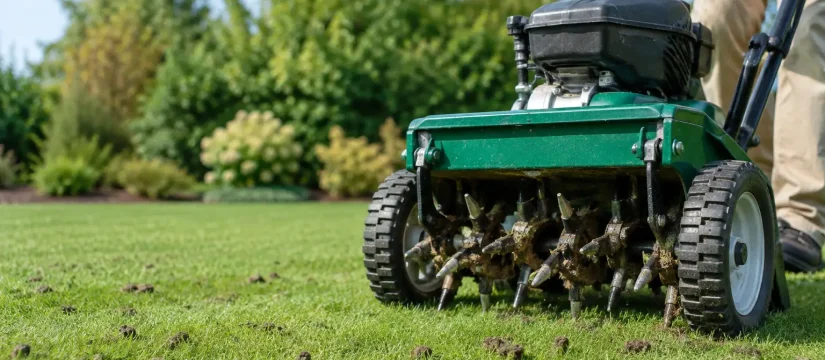
A lawn can be freshly mowed, neatly edged, and still feel tired underfoot. When water puddles after a storm, grass thins in the busiest parts of the yard, or the soil feels hard as clay, lawn aeration may be the service that addresses what is happening beneath the surface. It is not a cosmetic fix. It is a practical way to help turf roots access the air, moisture, and nutrients they need to grow well.
For homeowners in Shreveport, Bossier City, Benton, and Stonewall, that matters. Northwest Louisiana heat, heavy rainfall, clay-rich soil, and regular foot traffic can all press soil particles tightly together. A lawn may look fine in spring, then struggle once summer heat asks more of its root system.
What lawn aeration actually does
Core lawn aeration removes small plugs of soil and thatch from across the turf. Those openings create space in compacted ground, allowing air and water to move down toward the roots instead of lingering near the surface. The plugs usually break apart naturally with irrigation, rain, and mowing over the next couple of weeks.
This process also encourages roots to grow deeper. Deep roots make a lawn more resilient when rainfall is inconsistent, temperatures rise, or regular use puts pressure on the grass. Aeration can improve how well a lawn responds to fertilization, too, because nutrients have a clearer path into the root zone.
It helps to separate true core aeration from spike aeration. A spike tool pokes holes into the ground but can compact the surrounding soil as it enters. Core aeration physically removes soil, which generally provides more meaningful relief for established lawns dealing with compaction. For a property with persistent drainage concerns or visibly hard soil, that difference is worth considering.
Signs your yard may need aeration
Compaction is not always obvious from the porch, but a few patterns are hard to miss once you know what to watch for. Water that runs off or puddles instead of soaking in is a common sign. So is grass that looks thin, pale, or stressed despite appropriate mowing, watering, and fertilization.
High-traffic areas deserve special attention. Think of the route from the driveway to the front door, a favorite backyard play area, gates, pet runs, or the space around an outdoor gathering area. Soil in these places gets compressed little by little, often long before the rest of the lawn shows trouble.
Thatch can be another clue. A modest layer of decomposing grass material is normal, but a thick, spongy layer between the green blades and the soil can prevent moisture and nutrients from reaching roots efficiently. Aeration helps manage that layer over time, though a severe thatch issue may call for additional treatment.
You can also try a simple screwdriver test after the soil has been watered. If a screwdriver is difficult to push a few inches into the lawn, compaction may be part of the problem. That is not a full diagnosis, but it is a useful reason to take a closer look.
The best time for aeration in Northwest Louisiana
Timing matters because a lawn needs active growth after aeration to recover and fill in. Most local lawns are warm-season grasses, including Bermuda, zoysia, and St. Augustine. These grasses usually benefit most from aeration in late spring through summer, once they have fully greened up and are actively growing.
For many properties, late spring or early summer offers a comfortable window. The grass has enough growing season ahead to heal, but conditions are not yet at their most punishing. The exact timing depends on grass type, irrigation, recent weather, and the lawn’s overall health.
Avoid aerating a lawn that is dormant, severely drought-stressed, or waterlogged. Aerating immediately before a period of intense heat without a plan for watering can add stress rather than relieve it. In the same way, saturated soil can create a messy result and may not allow equipment to work as intended.
A professional assessment is especially helpful when your yard includes a mix of turf varieties, newly planted grass, slopes, irrigation lines, or landscaped beds that meet the lawn. A thoughtful plan protects the details that make a property feel cared for, not simply maintained.
What to do before and after aeration
A little preparation makes the service more effective. Mow the lawn at its usual height shortly before the appointment, and clear toys, furniture, hoses, and other obstacles from the turf. Mark sprinkler heads, shallow utility lines, landscape lighting, or other features that could be hidden in the grass. If the ground is very dry, watering the day before can help the aerator pull clean cores without turning the lawn muddy.
Afterward, leave the soil plugs where they are. They may look untidy for a short time, but they return organic material to the lawn as they break down. Continue mowing as needed once the turf is dry, and follow a sensible watering routine that keeps the root zone consistently moist without creating runoff.
Aeration is also an excellent moment to address related lawn needs. If a soil test indicates nutrient deficiencies, fertilizer can be applied according to the recommendation. If bare areas need attention, appropriate grass repair or overseeding may be considered, although warm-season turf often establishes best through plugs, sod, or spreading growth rather than traditional seed. The right next step depends on the grass already growing in the yard.
Do not expect an overnight transformation. Aeration improves the conditions for healthier growth, but grass still needs time, seasonal warmth, appropriate mowing, and reliable moisture to respond. A lawn that has been compacted for years may improve noticeably over more than one treatment cycle.
Aeration is helpful, but not every lawn problem is compaction
It is tempting to treat aeration as the answer to every thin or brown patch. Sometimes it is part of the solution, but it cannot correct shade that has increased as trees mature, a damaged irrigation zone, insect activity, disease, poor drainage design, or grass that is simply not suited to a particular site.
For example, St. Augustine can struggle where tree cover limits sunlight, even if the soil is loose and well-fed. Bermuda generally wants more direct sun and may thin beneath a dense canopy. A wet area near a downspout may need drainage or grading attention before any turf treatment can perform well. Aeration helps roots use the soil they have, but it does not change the site itself.
This is why property care works best when the lawn is viewed as part of a larger outdoor system. Irrigation coverage, tree canopy, mowing height, soil conditions, and how a family uses the yard all affect the final result. A boutique standard of care means looking beyond the obvious brown spot and finding the reason it keeps returning.
How often should a lawn be aerated?
Many established lawns benefit from core aeration about once a year, especially if they have clay-heavy soil, active children or pets, frequent entertaining, or regular equipment traffic. A lightly used lawn with healthy drainage and loose soil may only need it every other year. Commercial properties can have their own schedule based on traffic patterns and the appearance expected at entrances, common areas, and highly visible green spaces.
More is not automatically better. Repeated aeration without a clear need can disrupt turf and add unnecessary expense. The goal is not to create holes for their own sake. It is to restore a healthier balance of air, water, soil, and roots.
A well-aerated lawn has a quiet advantage: it is better prepared before summer stress arrives. Give the roots room to grow, then support them with smart watering and consistent care. The result is not just greener grass, but a yard that feels more welcoming from the curb to the back porch.